Colleyville Sellers Just Inherited a New Disclosure Job, Courtesy of 1956
August 27, 2026
August 27, 2026
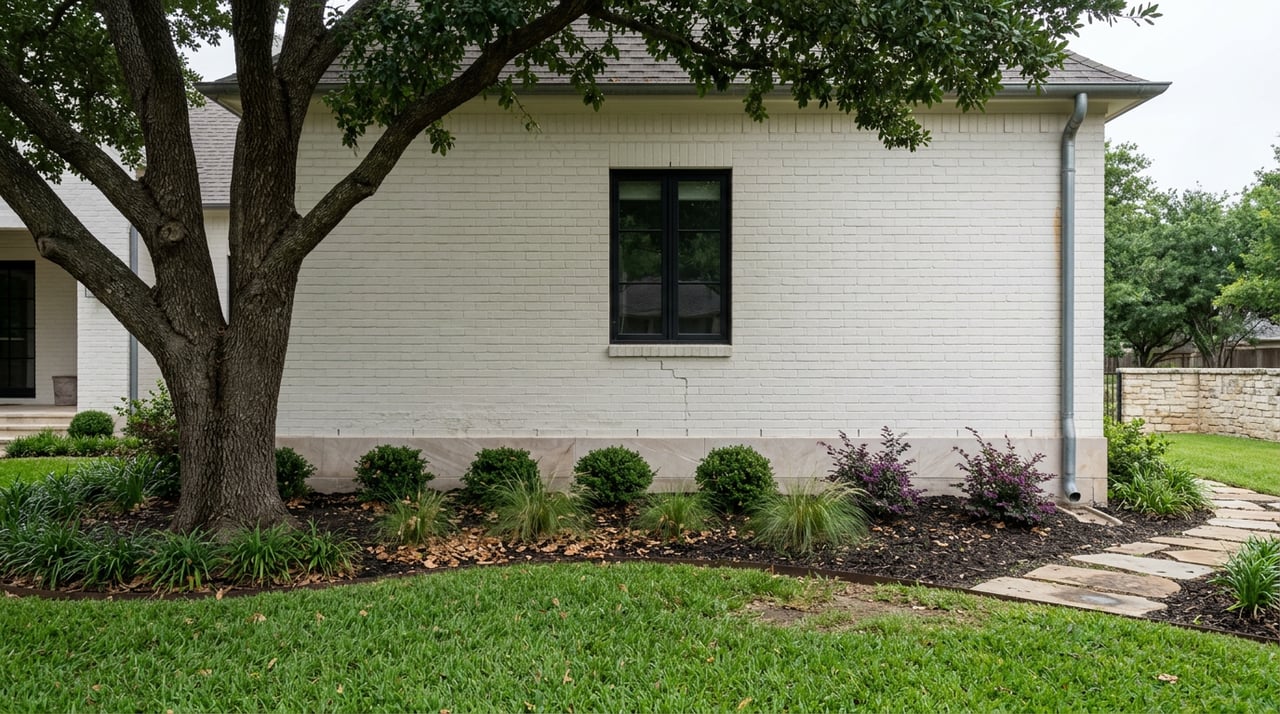
Somewhere on an older lot in Colleyville, tucked behind a decades-old oak or paved over by a driveway addition, there may be a capped pipe nobody has thought about since the Carter administration. Not a working well. Not a functioning system. Just a leftover from the years before this stretch of northeast Tarrant County was fully wired into city water.
Starting July 1, 2026, that forgotten pipe became the seller's problem.
Texas rolled out a new statewide disclosure form this summer, and while the paperwork itself is generic, the way it lands on the ground is not. In a city built gradually out of small farm communities and only fully wired for municipal service over the better part of six decades, the new rule finds more to ask about in Colleyville than it does in most of its neighbors.
Colleyville didn't start as one place. It formed out of a handful of small rural settlements, Spring Garden, Pleasant Run, Pleasant Glade, and Bransford, that banded together into a single incorporated town on January 10, 1956, largely to avoid being annexed by Hurst. At the time, the newly formed city had no sanitary sewer system. Over the following six decades it grew from that starting point into the affluent, tree-canopied suburb it is today, according to a Dallas Morning News retrospective on the city's transformation.
That gradual buildout matters for one practical reason: municipal water and sewer lines don't appear everywhere at once. They extend outward from a center, year by year, subdivision by subdivision. A property near the historic core of old Colleyville may have connected to city water decades before a lot further out along the Southlake or Grapevine border did the same. Some of those outer, larger-lot properties, the kind with mature trees and generous acreage that this market is known for, never fully gave up their private wells. Others simply stopped using a well once city water arrived but never formally closed it out.
The Texas Real Estate Commission adopted a package of form updates on May 4, 2026, following direction from the Sunset Advisory Commission's periodic review of the agency. Two pieces of that package matter here. The existing Seller's Disclosure Notice picked up new categories, and TREC created something that didn't exist before: a standalone Water Notice, Form 61-0, dedicated entirely to groundwater and surface water rights.
Both forms were available for voluntary use starting in late May 2026 and became mandatory for every residential contract written on or after July 1, 2026. A new provision, Paragraph 7(I) in the standard residential contract, is what triggers the seller's obligation to complete the Water Notice.
Here's roughly what that form now puts on the record:
| What the seller discloses | Why it matters |
|---|---|
| Whether the property has a water well, active or not | Applies even if the seller hasn't used it in years |
| Whether the property sits in a Groundwater Conservation District | Affects pumping rights and future use |
| Known surface water features and related rights | Ponds, creeks, or drainage that may carry usage restrictions |
| What the seller actually knows, not what they've investigated | The form doesn't require a title search or well survey |
That last line is the part worth sitting with. The Water Notice isn't asking sellers to hire an engineer. It's asking them to say what they already know. The catch is that "already know" covers more ground than most long-time owners assume, including a well they haven't touched since city water arrived.
Colleyville's defining physical trait, the thing that shows up in every description of the city, is lot size. Larger residential lots and mature trees separate it from denser Mid-Cities neighbors, and that same lot size is why private well ownership is more common in Colleyville than in cities like Euless or Bedford. Some older homesteads and estate properties in the city still draw from private wells that predate the municipal water extensions that eventually reached them.
That's not a knock on the city's infrastructure. It's a description of timing. A subdivision built in the 1970s on a large lot near what was still semi-rural land didn't necessarily connect to city water the same year it was platted. A well drilled for that original house may have gone unused the moment the water main arrived, capped and forgotten under forty years of landscaping, additions, and pool construction.
Multiply that timing gap across the number of large, older lots the Southlake-Westlake-Colleyville corridor is known for, and the new Water Notice stops being a paperwork formality. It becomes a question that a meaningful share of Colleyville's actual seller pool has to answer honestly, in a way that a seller in a newer, uniformly city-serviced subdivision simply doesn't.
The form asks for known facts, not new investigation. That's the good news. The harder news is that "known" is a lower bar than most sellers assume once a real estate attorney or title company starts asking follow-up questions at the closing table.
Before listing an established Colleyville property, it's worth doing three things:
Walk the property with someone who's owned it a while, or who inherited it, and ask directly whether anyone remembers a well, a wellhead, or a capped pipe anywhere on the lot. Old surveys sometimes note it even when current owners don't recall it.
Pull the original survey or any older title documents if they're accessible. Wells drilled before certain reforms took effect were sometimes noted on plats in ways that got lost in later paperwork.
If a well turns up, even one that hasn't been used in decades, get it properly evaluated rather than guessing at its status. A local well service that regularly handles Colleyville properties will know how to confirm whether something was ever legally abandoned and plugged, and can document that for the file. FlowCore Water, which services wells throughout Colleyville and the surrounding Tarrant County area, is one example of the kind of local resource that can put a firm answer on paper before it becomes a closing-table question.
None of this is meant to make sellers investigators. It's meant to make sure "I don't know" is actually true when it's written on a state form, rather than a guess that turns into a dispute six months after closing.
Buyers touring an established Colleyville estate should treat the Water Notice as a starting point for a conversation, not a guarantee. If a seller discloses a well, active or not, that's worth a direct follow-up: was it ever formally plugged and abandoned to state standards, or does it simply sit unused. If the property is in a Groundwater Conservation District, that can carry real implications for irrigation, pool fills, or any future well work, even on a lot that's fully on city water today.
None of this should scare a buyer away from a large, established Colleyville lot. It should just move the well question from an afterthought to a line item, the same way foundation history or a roof's age already are.
Does every Colleyville seller need to fill out the new Water Notice, even if the home has always been on city water? Yes. The form is now a standard part of the transaction under Paragraph 7(I) of the residential contract, regardless of whether the property has ever had a well. For a home with no well history, it's typically a short, straightforward disclosure.
What if a seller genuinely doesn't know whether there was ever a well on the property? Texas doesn't require sellers to investigate what they don't know. The form asks for known information. That said, given how common legacy wells are on Colleyville's older, larger lots, it's worth checking with a well service or reviewing older survey documents before assuming the answer is no.
Is the Water Notice the same thing as the standard Seller's Disclosure Notice? No. The Seller's Disclosure Notice, also updated this year, covers material defects broadly. The Water Notice is a new, separate, standalone form focused entirely on groundwater and surface water rights.
This is general information about a new state form, not legal advice. Anyone with questions about how it applies to a specific Colleyville property should talk with a real estate attorney or their title company before listing.
Preparing to sell an established home in Colleyville, or looking at one with a longer history than the listing photos suggest? The Marcontell-Gilchrest Group has spent years walking Colleyville's larger lots and knows what questions belong on the table before a property ever goes live. Contact us to talk through what your specific property might need before you list.
Stay up to date on the latest real estate trends.





Experience the winning combination of Marcontell-Gilchrest Group, with over $2 Billion+ in successful transactions and 30+ years of expertise, we are your ultimate partners in buying or selling a home. We are uniquely qualified to assist Sellers in positioning and marketing homes in today’s competitive environment and write winning offers for Buyers. Discover the power of our diverse backgrounds and award-winning talents. Choose us for your Real Estate buying or selling needs!