Keller Home Buying: Why Fence-Line Zoning Matters
September 10, 2026
September 10, 2026
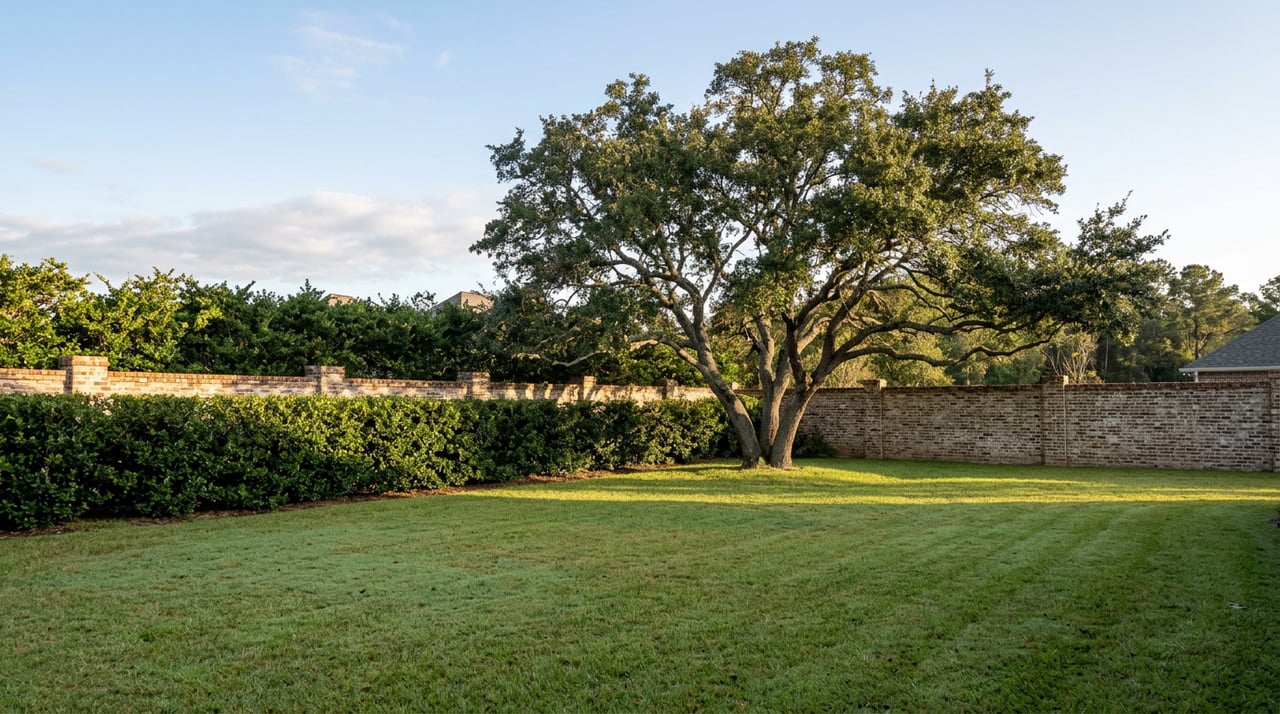
If you pulled up a listing in Keller's Lakes at Marshall Ridge neighborhood in June, it looked like any other well-kept Keller street. Mature trees, a price in the same band as comparable homes across Keller ISD, a backyard that faced open land to the north. Nothing about the listing sheet would have told you that the parcel behind those fences had been zoned for industrial and commercial use since 1998, or that a data center campus was already working its way through approvals on the other side of the property line.
That is the story sitting underneath the fight now playing out between Keller and the Town of Westlake, and it is worth understanding even if you have no interest in Marshall Ridge specifically. The lesson has nothing to do with data centers as a technology trend. It has to do with what a city line actually protects and what it doesn't.
The land in question sits just across Keller's northern border in Westlake, off U.S. Highway 377. Westlake has kept that parcel zoned for commercial and industrial use since 1998. Keller's side of the same stretch tells a different story. Keller rezoned its adjacent land to residential in 2006 under Ordinance 1309, then went further in 2015 with Ordinance 1742, adding fifteen more homes directly along the fence line separating Marshall Ridge from the Westlake parcel.
Westlake Mayor Kim Greaves has pointed to that second decision as the root of the current dispute, arguing those fifteen homes were built without the consultation of Westlake or a review of the existing zoning. Whether or not you find that framing fair, the underlying fact is not in dispute: one city treated the far side of a shared fence line as fixed and buildable homes right up against it, while the other city's zoning designation for that same fence line never changed. Two decades later, that mismatch is exactly what allowed an 88-acre data center campus, four buildings totaling roughly 1.1 million square feet, to move through Westlake's approval process as a by-right use rather than a discretionary one requiring Keller's input.
That is the mechanism a median price or a school rating will never surface. A parcel's zoning history on the other side of your property line can sit dormant for decades and still be fully active, waiting for the right buyer with the right entitlement.
Much of the public argument in August turned on how close is close. Westlake's public messaging described the project as more than 1,200 yards, about two-thirds of a mile, from the nearest Westlake resident. What that framing left out is the distance to Keller.
| Measurement | Distance |
|---|---|
| Nearest Westlake resident (per Westlake's public statements) | Over 1,200 yards |
| Nearest Marshall Ridge backyard (per Keller and multiple news reports) | Approximately 500 to 506 feet |
| Westlake's own minimum setback requirement for this zoning | 150 feet |
Westlake maintains the site plan exceeds that 150-foot minimum and, in the town's words, satisfied every applicable approval requirement. The Lakes at Marshall Ridge Homeowners Association disagrees, and its lawsuit specifically alleges the approved site plan omits the 150-foot setback and landscaped buffer the town's own ordinance requires between an industrial use and adjoining residential lots. Attorney John Friedman, representing the HOA, put the practical stakes plainly in court: the facility would be lit up center all day, every day, right behind them.
Neither side disputes the numbers. They dispute whether the numbers satisfy the rule, which is precisely the kind of question that only gets litigated after a project is already approved, not before a buyer signs a contract two neighborhoods away.
This is not a settled story, and treating it as one would misrepresent where things actually are. Here is the sequence so far:
That extension date is two days from today. The core legal question, whether Westlake's approved site plan actually complies with its own 150-foot setback and buffer requirement, has not been resolved. Anyone tracking a specific listing near that border should be watching the court's ruling directly rather than relying on either city's public statements alone.
Step back from Marshall Ridge and the lesson generalizes cleanly. Nearly every desirable DFW suburb, Keller included, has a seam somewhere along its border where its own zoning stops and a neighboring town's zoning begins. Southlake borders Westlake and Grapevine. Colleyville borders Grapevine and North Richland Hills. Trophy Club borders Westlake and Roanoke. None of those seams show up on a listing photo, and none of them move the median price until something gets built.
The practical takeaway for a buyer isn't to avoid every home near a municipal boundary. It's to ask a different question than the one most buyers ask. Instead of only confirming what your own city allows on your own lot, ask your city's planning department, or the neighboring city's, what is zoned on the parcel immediately across the line, and whether that use is permitted by right. A by-right entitlement doesn't require a public hearing to activate, which means the property could look unchanged for twenty years and then change fast, the way Circle T did between late July and mid-August.
For sellers near any such seam, this cuts the other way. If your property backs to land zoned for something other than what's currently there, that is a fact worth disclosing and discussing with a straight face rather than hoping a buyer doesn't ask. Discretion protects a transaction. Silence on a known zoning fact does not.
Does this only affect Marshall Ridge? The lawsuit and the immediate proximity concerns are specific to Marshall Ridge, since it is the Keller neighborhood whose fence line sits closest to the proposed site. Other Keller neighborhoods are not named as parties to the dispute.
Is the data center definitely going to be built? Not as of this writing. The temporary injunction remains in place through September 8, 2026, and the underlying question, whether the approved site plan meets Westlake's own setback and buffer requirements, has not been decided by the court.
Does living near a city line always carry this kind of risk? Not always, but the exposure is worth checking rather than assuming away. The relevant fact isn't the city line itself. It's whether the zoning on the far side of that line permits a use that would surprise you if it were built tomorrow.
What should I actually ask before writing an offer near a municipal border? Ask what the adjoining parcel across the property line is zoned for, whether that use requires public hearings to activate, and whether any development agreements or site plans are already on file with the neighboring city. Your agent or the city's planning department can pull this in an afternoon.
This is exactly the kind of question that separates a surface-level home search from one grounded in how North Texas suburbs actually grow. If you are weighing a purchase near any of these borders, or wondering what a fence-line risk like this could mean for a home you already own, the team at Marcontell+Gilchrest Group can walk the parcel history with you before you write an offer, not after. Contact Us.
Stay up to date on the latest real estate trends.
Experience the winning combination of Marcontell-Gilchrest Group, with over $2 Billion+ in successful transactions and 30+ years of expertise, we are your ultimate partners in buying or selling a home. We are uniquely qualified to assist Sellers in positioning and marketing homes in today’s competitive environment and write winning offers for Buyers. Discover the power of our diverse backgrounds and award-winning talents. Choose us for your Real Estate buying or selling needs!